Using PrepVault
How the role analysis works
When you paste a job description and run the analysis, PrepVault isn't just pulling keywords. It's reading the JD for specific skill clusters, comparing what it finds against what you've built on your profile, and surfacing the gaps worth paying attention to before the interview.
Here's what's actually happening and how to read the results.
Where the data comes from
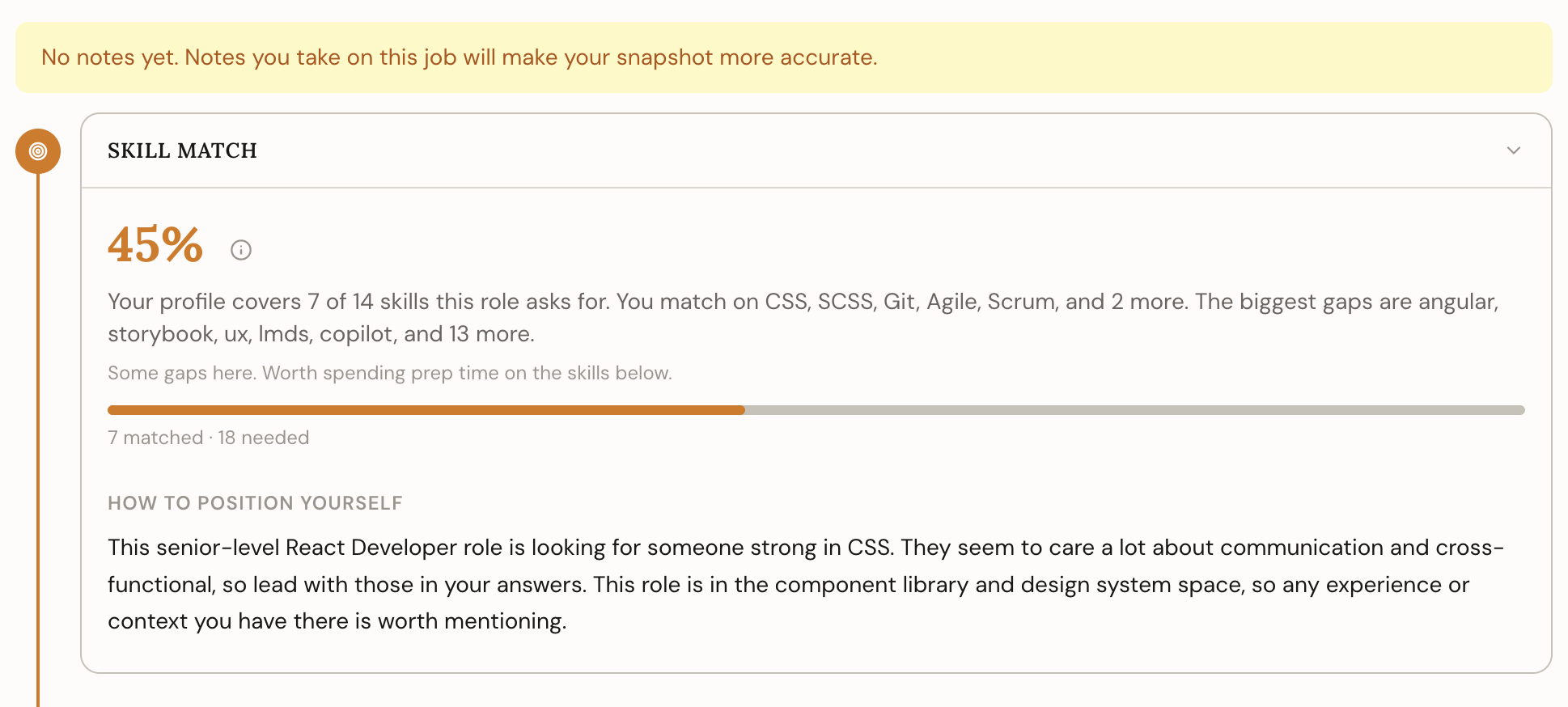
The analysis pulls from two places: your profile and the job description. On your profile, PrepVault tracks the skills you have. The job description is where the role's requirements come from. The analysis compares the two.
The job description gets parsed for required and preferred skills, which are different things. "Required" skills appear in the qualifications section. "Preferred" shows up in the nice-to-have section. If the JD lumps everything together in one block, the parser makes its best guess based on language like "must have" versus "experience with is a plus."
What the skill chips mean
Green chips are skills the JD asks for that are already on your profile. These are your strengths going in. You don't need to prep for these specifically, though you should have examples ready.
Grey chips are skills the JD mentions that aren't on your profile. The role analysis won't tell you to panic over every one. What it will do is surface the ones that appear most frequently in that type of role, because those are the gaps most likely to come up in an interview.
The note alignment score
If you've written notes about this job, the role analysis also scores how well your notes reflect the actual requirements of the role. A high score means your notes are capturing the things the employer is actually asking for. A low score usually means your notes are more about logistics (interview times, who you talked to) than preparation.
This isn't a judgment. It's useful information. If your notes cover the wrong things, the prep brief and question bank for that role will feel disconnected from what the JD is actually asking.
The overloaded role flag
If a role spans three or more distinct engineering disciplines, like full-stack dev plus DevOps plus QA, the role analysis flags it as an overloaded stack. This isn't automatically a bad thing. Some teams genuinely need generalists. But it's worth understanding before you walk into the interview.
The right move with an overloaded JD is to ask in the interview which areas are day-to-day versus occasional. "Is this a role where someone would own all of these, or is there a team supporting the infrastructure?" is a completely legitimate question and usually tells you a lot about how the role actually works.
Quick reference
- Green chips
- Skills you have that the JD asks for
- Grey chips
- Skills the JD asks for that aren't on your profile
- Note alignment
- How well your notes reflect what the JD actually requires